
Welcome to Data Privacy Week, brought to you by the same group, the National Cybersecurity Alliance, who promotes Cybersecurity Awareness Month. We’re getting a late start on the week due to the winter storm that, thankfully, only gave us some rain, but I know that many of your hometowns were affected and I hope that everyone was able to adjust, and will continue to adjust as cold temperatures stay with us.
Data Privacy Week is just that – a week to take a few minutes and make sure that you are protecting your privacy while engaging in all of your online activities. That includes everything from browsing web sites to banking to gaming to social media (especially social media). We are constantly tracked and tidbits of information about us are aggregated and sold by data brokers on a daily basis. There are few ways to stop the tracking, aside from turning off every electronic thing you have, including your car and newer major appliances.
Protecting your personal data has never been more important, especially as nearly everything we do—shopping, banking, social media—creates a digital trail. Many people don’t realize just how much information companies collect or how widely it’s shared. A great place to start learning about these issues is the U.S. Government Accountability Office’s overview of privacy challenges, which explains how personal data is collected and used, and why stronger protections matter. You can explore it here: Protecting Personal Privacy – U.S. GAO.
If you’re wondering what rights you actually have over all of this data – your data – the Consumer Financial Protection Bureau provides a fairly technical explanation of how personal information is defined, why agencies collect it, and how you can request corrections or file complaints if something seems off. Their privacy hub is difficult to navigate, but for those who want to see all the details, here is the link: CFPB Privacy Resources. For more accessible tools, you can look at the Federal Trade Commission’s Topics page, which provides links to the various FTC information, including sections on Identity theft, the Do Not Call Registry, and other resources.
For those who want actionable tips for staying safe online and prefer non-government sites, the Electronic Privacy Information Center (EPIC) breaks down common risks—like online tracking, data brokers, and social media oversharing—in a very approachable way. Their site offers practical advice and helps you understand the hidden data flows happening behind the scenes: EPIC Consumer Privacy. If you’d like a deeper dive (still written in easy-to-understand language), this overview of privacy rights and protections is also helpful: Consumer Privacy & Data Protection Guide.
Finally, here are a few more focused resources to help increase your online privacy:
For better browser security:
PCMag – Want More Privacy? Change These Browser Settings
To clean up your scattered data trail, there are services that will help remove you from data broker databases. None of them are free, but here is a list of some of the best:
PCMag – The Best Personal Data Removal Services for 2026 (warning – ads!)
One of the simplest ways to block some of the tracking is to use an ad blocker. While using one may make the Internet far less “ad-full”, it may break some sites and some sites will complain and/or block you if you use one. Most ad blockers will allow you to whitelist sites (like Amazon) where you don’t mind the ads or tracking. With that said, here is a list with some of the best ad blockers:
PCMag – The Best Ad Blockers for 2026 (again – ads!)
Yes, all of these are from PCMag, but they are generally the first site returned in most searches that are not just AI generated slop, and once you install an ad blocker, even their site will be easier to navigate.
That’s all I have for this “Part 1” of Data Privacy Week. “Part 2” will focus on our (as in, Berry’s and indirectly, maybe your) responsibilities when we collect, store, and use “customer” data – all the information gathered from prospective students, current students, employees, alumni, donors and third-parties. Once we collect it we have certain responsibilities and we’ll discuss what those are in the next article.
Be looking this week for an invitation to complete your Spring 2026 Cybersecurity Awareness Training! This session focuses on privacy since we are starting it during Data Privacy Week and I tend to focus on other topics during training.
Check back here Thursday for Part 2!
Featured Image: Photo by Matthew Henry on Unsplash
 January (2023) News from Information Security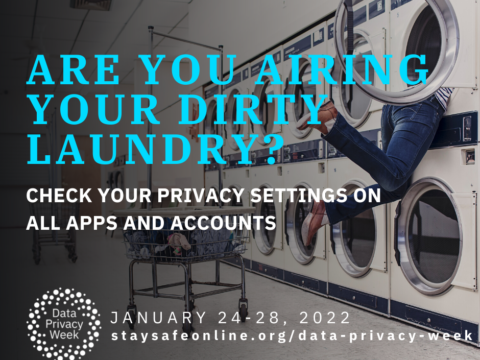
 Welcome to Data Privacy Week 2022!